
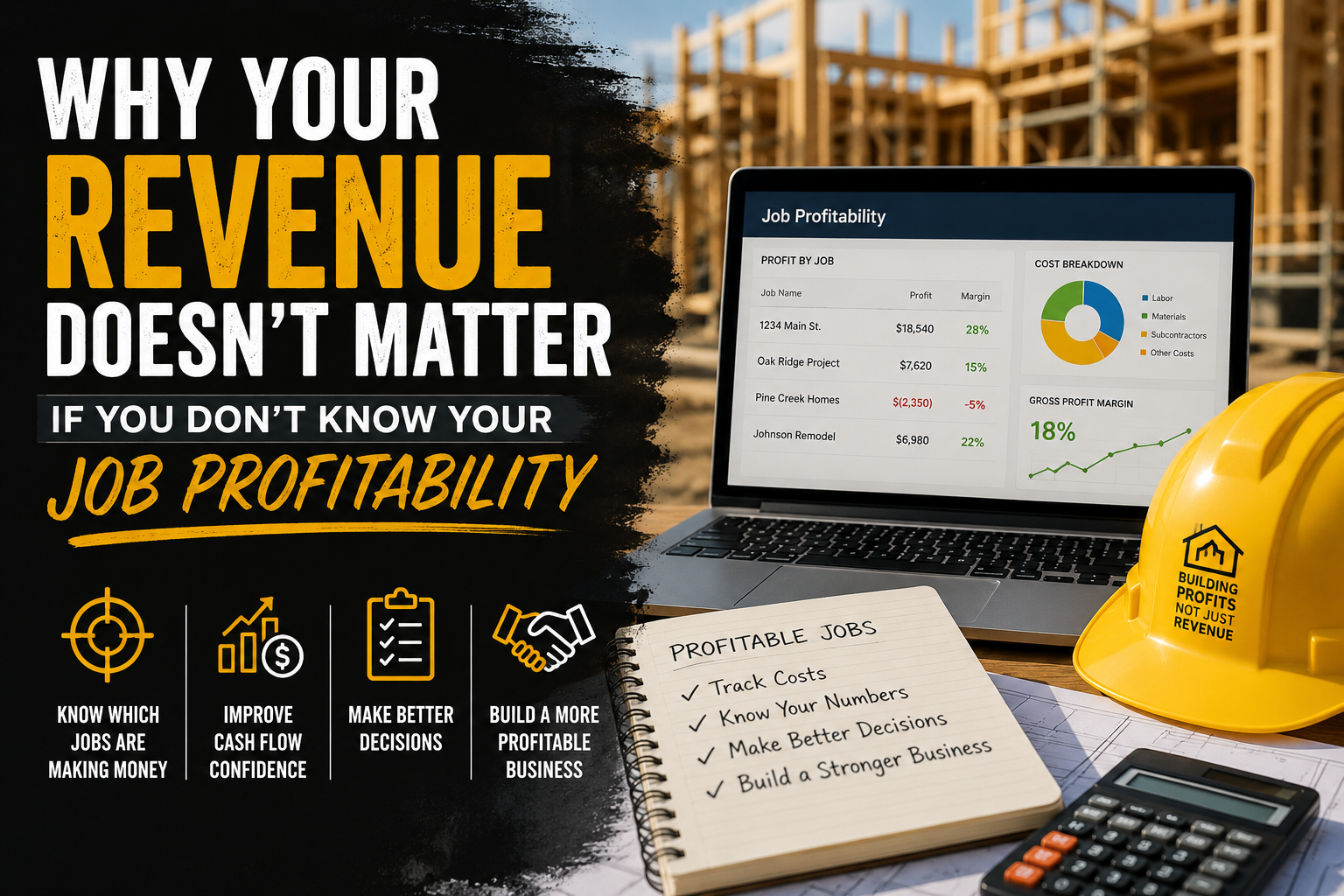
Unfortunately, that’s not always true.
I’ve seen contractors generate hundreds of thousands—even millions—in revenue while still struggling to pay bills, cover payroll, or put money in their own pocket. The reason is simple: revenue tells you how much money came in. It doesn’t tell you how much money you actually made.
The Hidden Danger of Revenue-Focused Thinking
Imagine two contractors:
Contractor A completes a $50,000 project and earns a $15,000 profit.
Contractor B completes a $75,000 project but only earns a $5,000 profit.
Who had the better job?
Most people immediately point to the larger project. But Contractor A made three times the profit.
Without proper job costing, you can’t see the difference.
What Job Costing Actually Tells You
Job costing tracks the true cost of every project, including:
Labor
Materials
Subcontractors
Equipment
Other direct job expenses
When these costs are tracked correctly, you can answer important questions:
Which jobs are most profitable?
Which customers generate the best margins?
Are your estimates accurate?
Are certain types of work costing more than expected?
The Cost of Not Knowing
When contractors don’t track profitability by job, they often:
Underbid projects
Repeat costly mistakes
Take on unprofitable work
Experience cash flow problems
Wonder why the bank account never seems to grow
The business stays busy, but profits stay thin.
What Successful Contractors Do Differently
Successful contractors don’t just track revenue.
They know:
* Gross profit on every job
* Labor costs by project
* Material cost overruns
* Which projects produce the highest margins
They use that information to make better decisions and improve profitability over time.
The Bottom Line
Revenue is important.
But profit is what keeps your business healthy.
If you don’t know which jobs are making money and which jobs are draining it, you’re making decisions without the information you need.
The contractors who consistently grow their businesses aren’t guessing. They’re tracking job profitability and using accurate financial data to guide every decision.
 English
  French